
Pterosaurs Flew With Surprisingly Small Brains
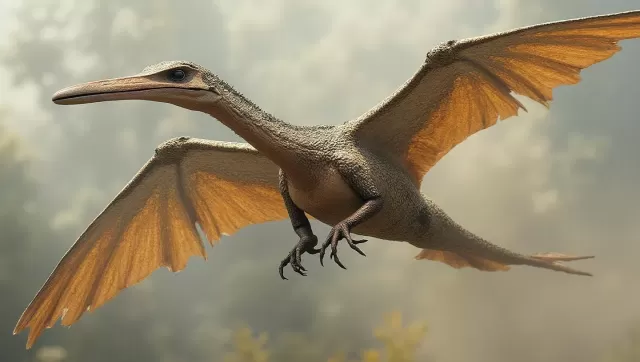
New research challenges long-held assumptions about the evolution of flight, suggesting that the path taken by ancient pterosaurs was remarkably different from that of birds. A study from Johns Hopkins Medicine indicates that these massive flying reptiles, which soared through the skies as early as 220 million years ago, may have achieved powered flight almost instantaneously in their evolutionary timeline. This rapid development occurred with brains that were significantly smaller and less complex than those of the ancestors of modern birds.
Advanced Imaging Reveals Ancient Brains
To understand how pterosaurs conquered the air, scientists turned to cutting-edge technology. The research team employed sophisticated CT imaging and specialized software to digitally reconstruct the internal brain cavities of fossilized skulls. This non-invasive technique allowed them to map out the shape and size of the brains of these prehistoric creatures, providing crucial insights into their neurosensory capabilities.
The investigation centered on the lagerpetid, a flightless, tree-dwelling reptile that lived during the Triassic period and is considered the closest known relative to the pterosaur. By examining the brain structure of this predecessor, the team sought to uncover the evolutionary groundwork that led to flight.
A Pre-Flight Blueprint in a Distant Cousin
The digital models of the lagerpetid's brain revealed a key adaptation: an already enlarged optic lobe. This region of the brain is dedicated to processing visual information, and its development suggests that these early reptiles had enhanced vision. Researchers believe this pre-existing trait was a critical advantage that their pterosaur relatives later capitalized on to navigate the skies.
While pterosaurs also possessed these advanced optic lobes, their overall brain structure was surprisingly distinct from the lagerpetids. Outside of this shared visual enhancement, the pterosaur brain was more comparable in size and shape to that of non-flying dinosaurs. This finding supports the theory of an abrupt evolutionary leap. Rather than a slow, step-by-step process, pterosaurs appear to have rapidly acquired all the necessary neurological tools for flight right at the outset of their emergence.
The Contrasting Evolutionary Path of Birds
The journey to flight for birds followed a much more gradual trajectory. Evidence suggests that avian ancestors inherited several key neurological traits from their dinosaur relatives long before they ever took to the air. These include the expansion of multiple brain regions, such as the cerebrum, the optic lobes, and the cerebellum, which is vital for muscle coordination and balance.
Supporting research highlights how the cerebellum, in particular, expanded significantly in the lineage leading to birds, playing an essential role in the eventual origin of avian flight. This model shows a slow accumulation of flight-ready characteristics over millions of years, a stark contrast to the explosive development seen in pterosaurs.
A Wider Prehistoric Perspective
To contextualize their findings, the team also analyzed the brain cavities of other prehistoric species, including crocodile ancestors and early birds like Archaeopteryx lithographica. This comparative analysis confirmed that pterosaurs had moderately sized brain hemispheres, similar to other bipedal dinosaurs such as the bird-like troodontids. The brains of these early fliers were substantially different from the significantly larger, more complex brains seen in the birds that populate our world today.
Looking forward, researchers aim to delve deeper than just the size and shape of these ancient brains. The next frontier is to understand the internal neural wiring and structure that truly powered pterosaur flight. Uncovering these secrets will be essential to understanding the fundamental biological principles that allow vertebrates to evolve the incredible ability to fly.